Focus Genesis
Barcelona, Spain

General Information
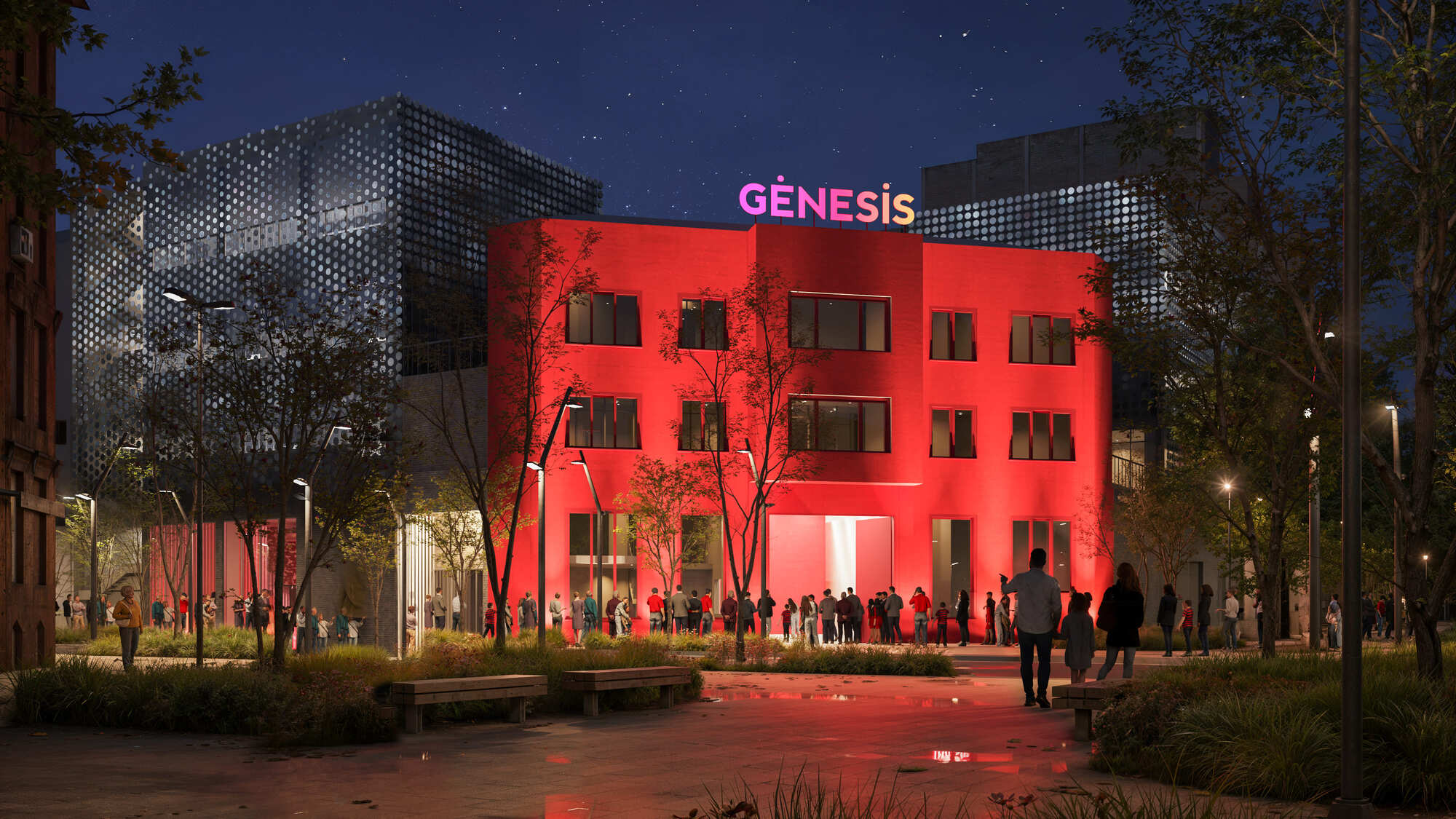
The project transforms a former industrial building into a new cultural and educational facility dedicated to the performing arts. The intervention is based on the rehabilitation of the existing building and its selective extension, combining the original industrial character with new contemporary, functional spaces open to the city.
The proposal enhances the memory of the place and adapts it to a new use with a strong social and cultural dimension, capable of hosting both public and educational activities while meeting current standards of comfort, accessibility, and regulations.
Location and Site
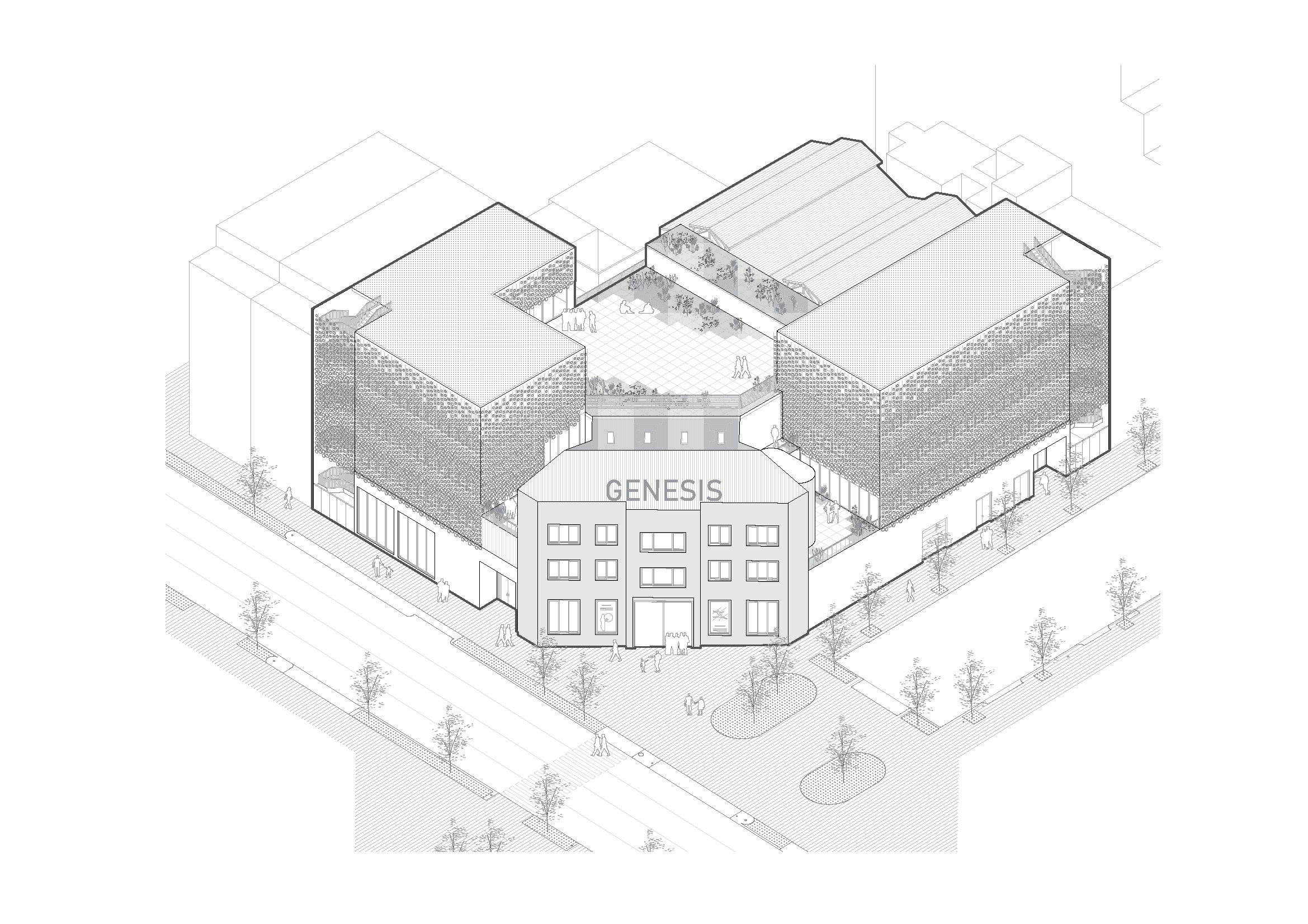
The building is located in the Sant Martí district, near Plaça de les Glòries, an area undergoing significant urban transformation. The plot occupies the chamfered corner between Tànger and Àvila streets, with a geometry characteristic of the Eixample grid, giving it a clear and recognizable urban presence.
The existing building, constructed in 1957, retains its original industrial structure and remains in good condition, particularly its façade. It is organized into several volumes around a central space.
The surroundings combine residential buildings and former industrial uses, reflecting Poblenou’s hybrid identity and reinforcing the project’s role as a transitional element between both urban fabrics.
Exteriors
The exterior intervention focuses on preserving and updating the most representative volumes of the complex, especially the chamfered corner and the rear volume known as El Palomar. Existing roofs and façades are refurbished, improving their structural and energy performance while restoring an image closer to the building’s original character.
The new extensions are carefully integrated along the street fronts, respecting maximum permitted heights and engaging in dialogue with neighboring buildings.
The central theater volume is renovated with the addition of a green roof, improving the building’s environmental performance.
To reinforce the project’s open and community-oriented character, the roofs of the lateral volumes are transformed into accessible outdoor spaces, conceived as areas for rest and interaction for students and faculty.
Interiors
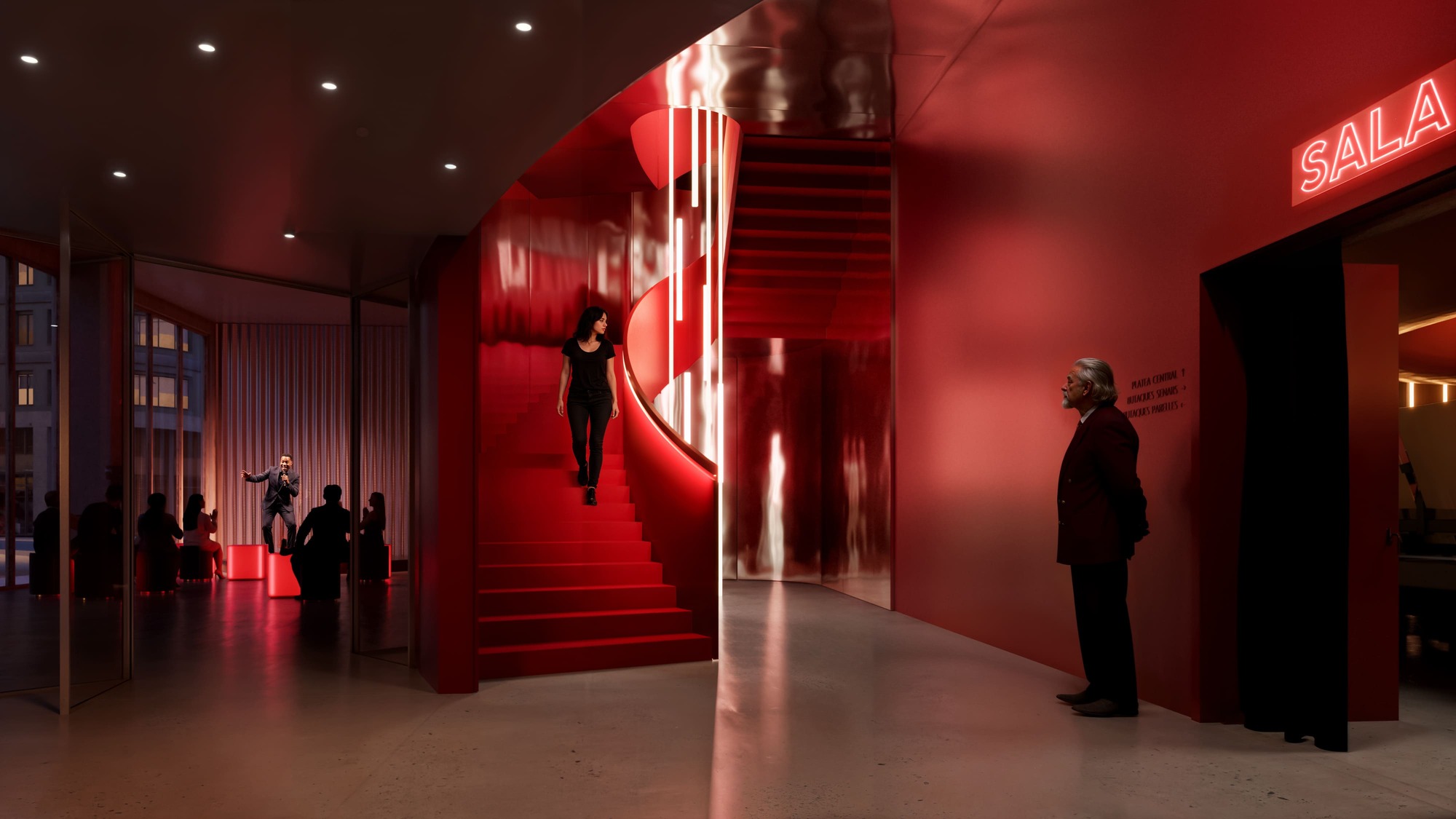
The building is organized around a main entrance at the chamfered corner, clearly connecting the two primary uses of the complex: cultural and educational.
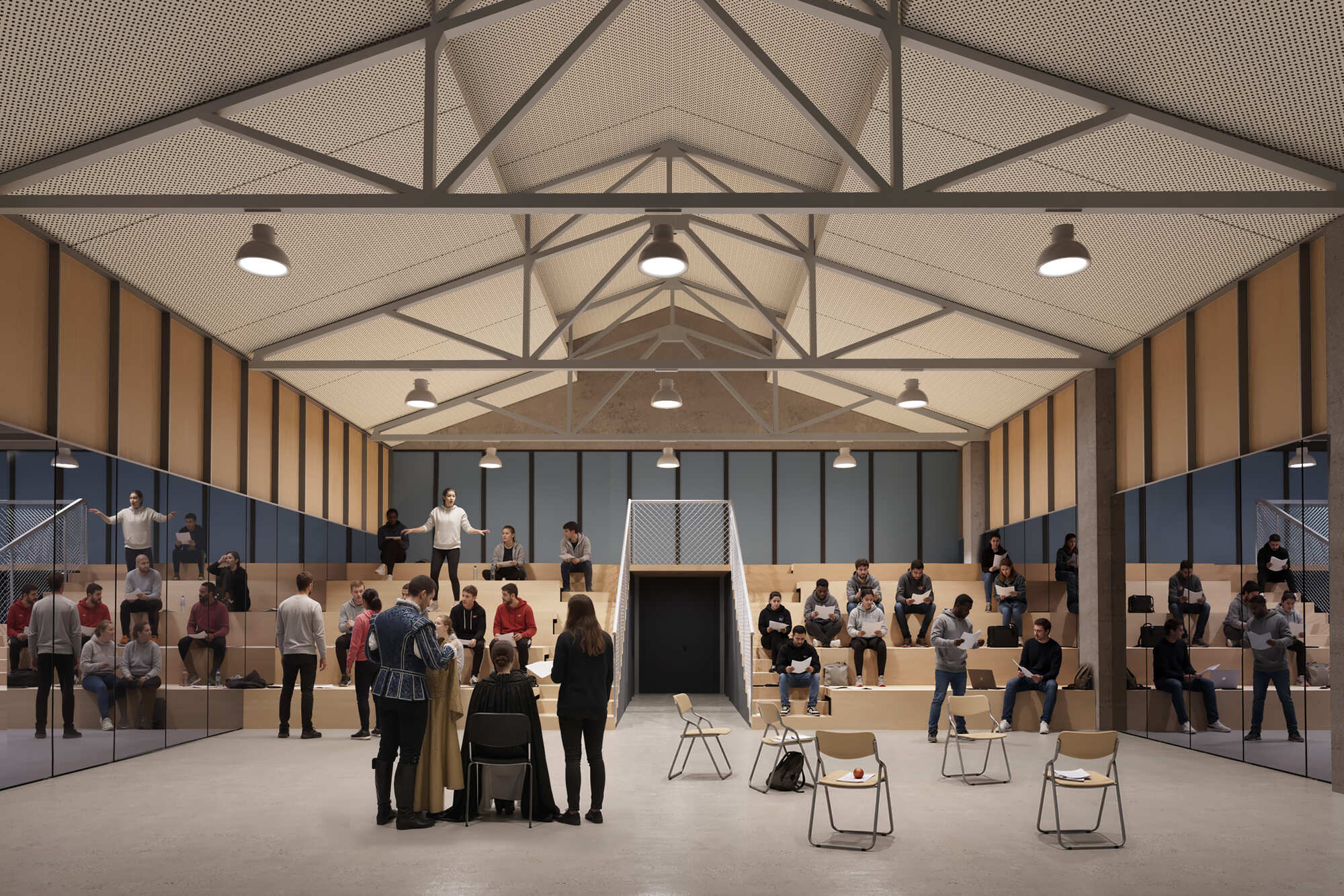
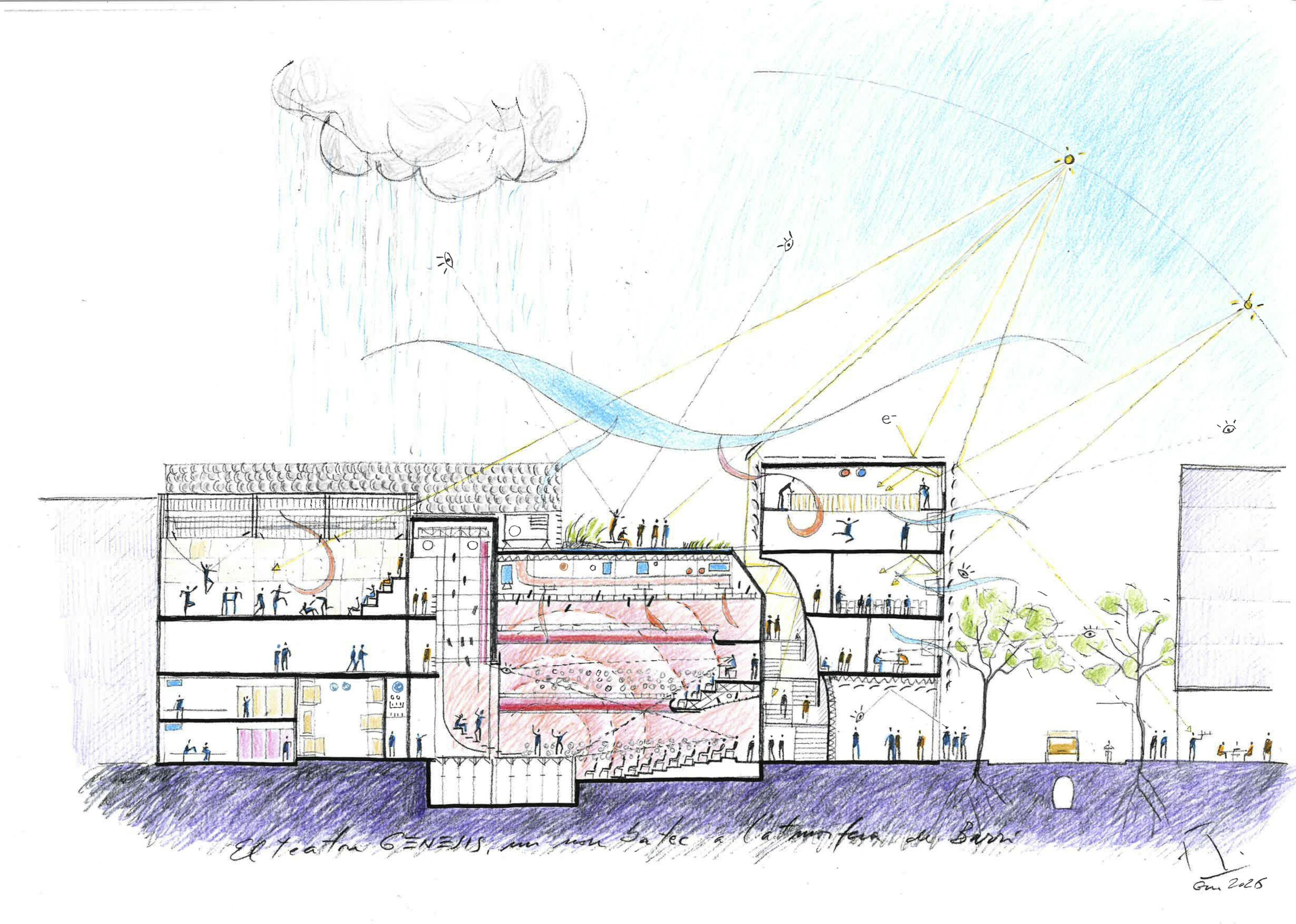
The ground floor accommodates public spaces. The theater is the central element, complemented by rehearsal rooms, dressing rooms, support spaces, services, and technical areas. Part of this level is also dedicated to educational activities related to the performing arts, fostering interaction between academic and cultural functions.
The upper floors are entirely devoted to artistic education, forming a specialized center for training in acting, singing, dance, and music. Spaces are flexibly organized and include:
- Bright, well-ventilated classrooms.
- Multipurpose rooms adaptable to different class and rehearsal formats.
- A large, high-ceiling dance studio with supporting technical spaces.
- Individual practice rooms for singing and piano.
- A spacious study room for individual and collective work.
- Lounge areas that promote well-being and everyday campus life.
The project places special emphasis on inclusion and diversity, incorporating spaces and services designed to ensure a safe, respectful, and accessible environment for all identities.
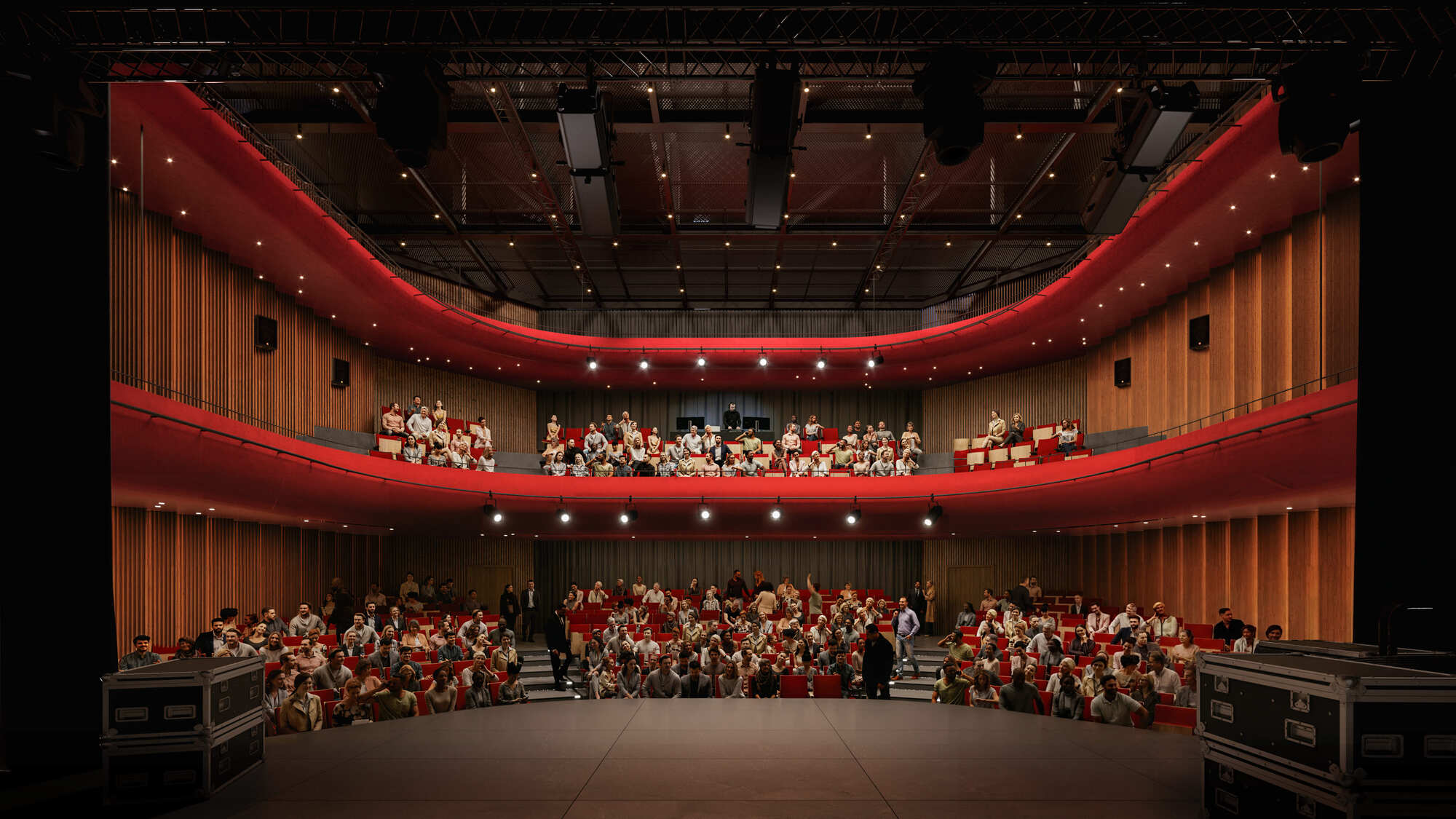
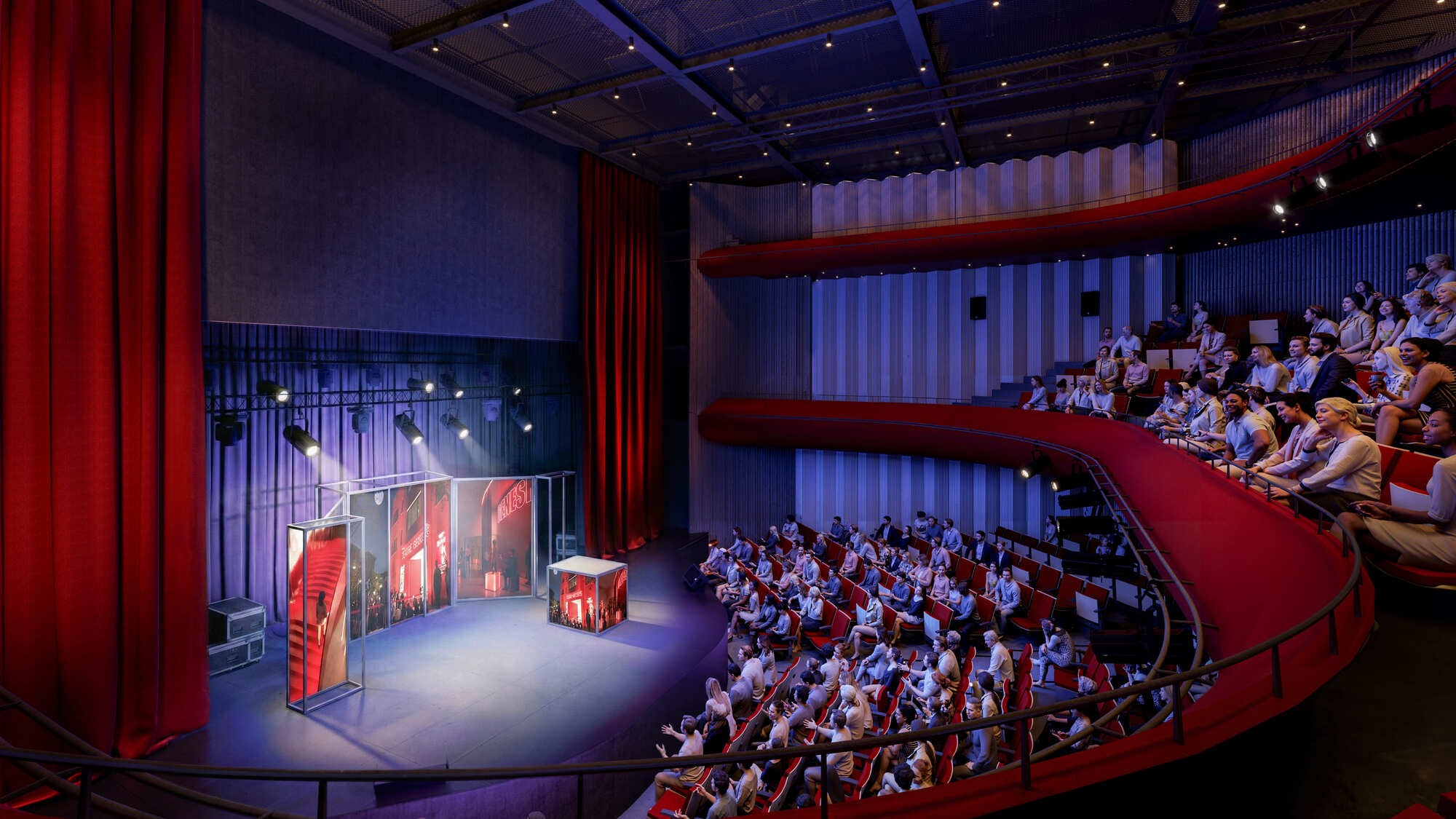
The theater is conceived as an intimate and immersive space, where the audience surrounds the stage, creating a direct relationship between spectators and performers. The hall is organized around a large semicircular proscenium and two amphitheater levels: one for the audience and another for technical use.
With a maximum capacity of 499 people, the hall ensures good visibility from all seats and clear, safe evacuation routes. The stage combines an interior stage house with an open proscenium, allowing for various types of performances.
The stage system is flexible, with adjustable platforms, integrated technical equipment, and fire safety solutions that enable adaptation to different productions and cultural formats.
Sustainability and Circular Economy
The foundation of the project lies in the reuse of the existing building, reducing environmental impact and making use of already built resources. Structures, volumes, and industrial elements are preserved whenever possible and integrated into a new contemporary use.
Upgrading the building envelope and incorporating green roofs contribute to improved energy performance and a better urban microclimate. Spatial flexibility extends the building’s lifespan and allows adaptation to future program changes.
The commitment to sustainable mobility, including extensive bicycle parking facilities, reinforces the project’s environmental responsibility.